




Posted by: Dr. Priyadarshi Amit (Reg. No : DMC-5266) | 0 COMMENTS
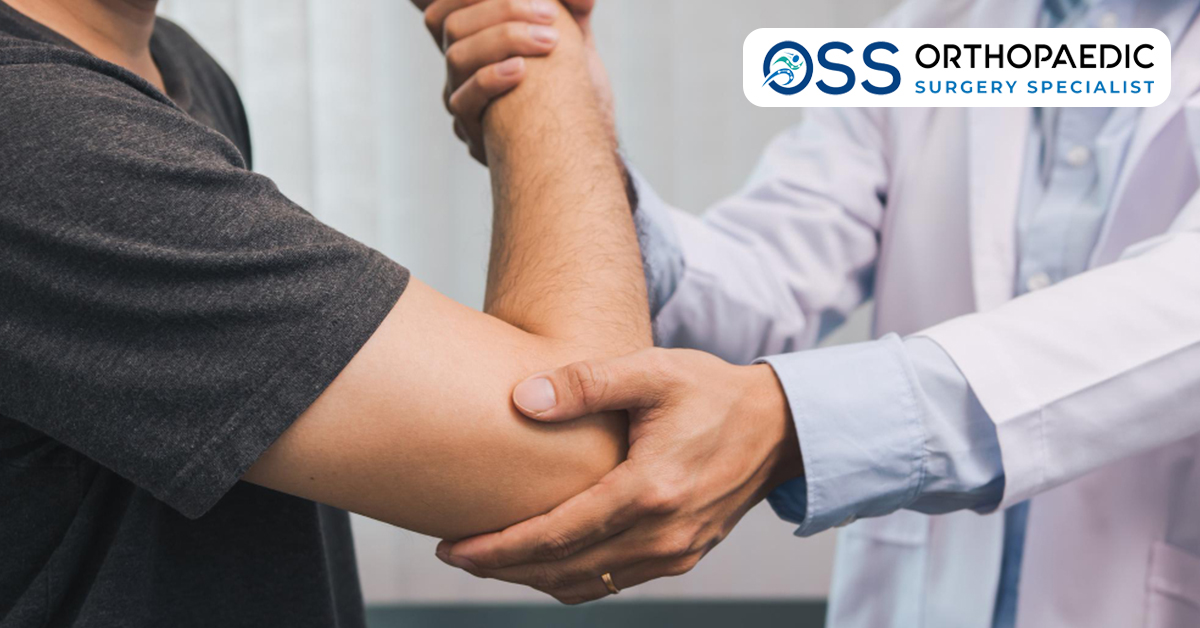
Your elbow plays a modest but remarkable role in your everyday life. From lifting a cup of tea in the morning, to reaching for a book on a shelf, to giving someone a warm embrace—it’s doing important work behind the scenes. When that elbow begins to ache, stiffen or simply stops cooperating, the impact can be far more than just discomfort. It can touch your quality of life.
In this article, Dr. Priyadarshi Amit walks you through everything you need to know about elbow replacement surgery—from why it’s needed, to what happens during and after the procedure—and helps you decide whether it may be right for you.
—
Why Consider Elbow Replacement?
Elbow pain and restricted motion are not just irritations. They may signal that your joint has reached a point where conventional treatment is no longer enough. The underlying causes often include:
– Wear-and-tear arthritis (osteoarthritis) that erodes joint surfaces.
– Inflammatory arthritis (rheumatoid arthritis) that damages the joint.
– Post-traumatic damage after fractures or dislocations.
– Instability or deformity of the elbow joint.
– Severe stiffness or loss of motion that affects daily tasks.
When rest, medications, and physiotherapy fail to help, elbow replacement may be the next step.
What Is Elbow Replacement Surgery?
Elbow replacement surgery removes the damaged parts of the joint and replaces them with artificial components—prosthetics—that restore smoother motion, reduce pain and improve function.
The elbow joint consists of three bones: the humerus (upper arm), and the ulna and radius (forearm). When damaged, these can no longer move smoothly. The replacement recreates a new, pain-free joint surface.
Types & Approaches
Total Elbow Replacement (TER): Both sides of the joint are replaced with a prosthetic hinge or semi-hinge device.
Partial / Hemi Elbow Replacement: Only one side of the joint is replaced when damage is limited.
Each patient is evaluated individually, and the treatment plan is personalized to their needs.
The Procedure
1. Pre-operative planning with imaging and medical evaluation.
2. Anaesthesia—regional or general.
3. Surgical incision at the back of the elbow.
4. Removal of damaged bone and cartilage.
5. Placement of prosthetic components.
6. Testing for stability and range of motion.
7. Closure and dressing.
The procedure generally takes 1.5–2 hours.
Recovery & Rehabilitation
Recovery requires teamwork between the patient and surgeon:
– Early motion exercises to prevent stiffness.
– Physiotherapy to build strength and mobility.
– Avoid heavy lifting for a few months.
– Most people resume light activities within 6–8 weeks.
Full recovery may take 3–4 months depending on individual progress.
Why Choose Dr. Priyadarshi Amit?
– Expertise in complex joint replacement surgeries.
– Personalized care plans.
– Advanced surgical techniques and technology.
– High success rates and patient satisfaction.
– Compassionate approach to patient care.
-Final Thoughts
Elbow pain doesn’t have to control your life. With modern surgical care, you can regain comfort, strength, and freedom of movement. If you are struggling with elbow pain, consult Dr. Priyadarshi Amit to explore whether elbow replacement can help you live pain-free again.
Related Blogs