




Rotator cuff repair
The rotator cuff is a group of four muscles and their tendons that stabilize the shoulder joint and allow for smooth and controlled arm movements. These muscles are: Supraspinatus, Infraspinatus, Teres minor, and Subscapularis. Together, they form a cuff over the head of the humerus (upper arm bone) and keep it firmly within the shallow socket of the scapula (shoulder blade).
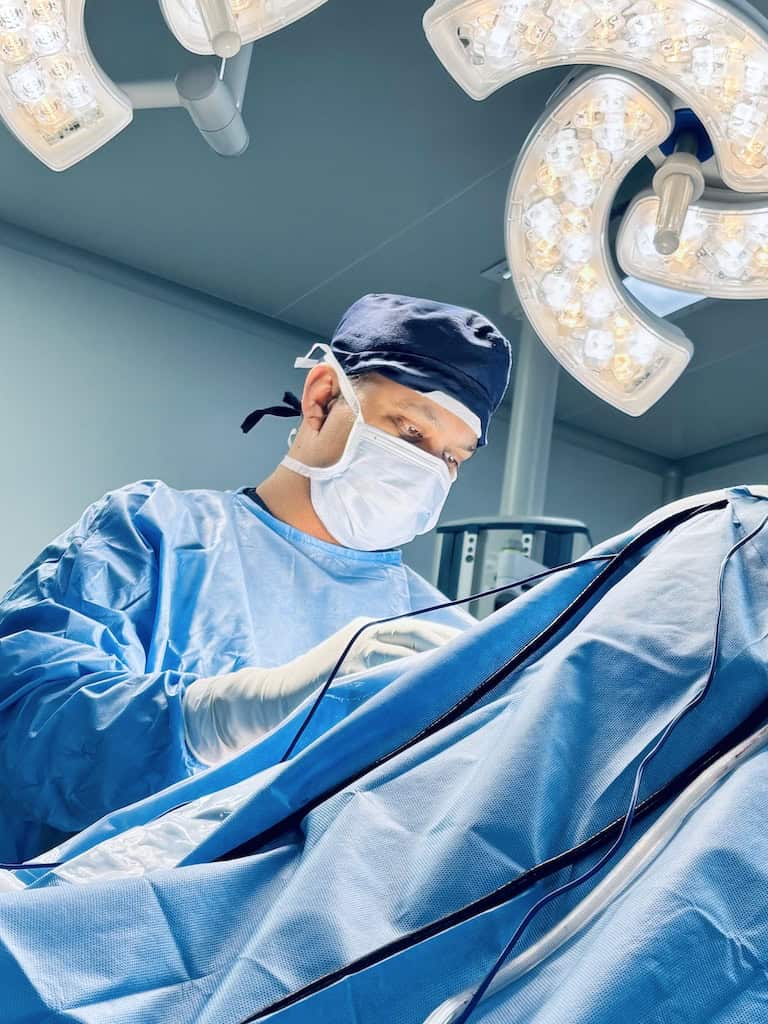
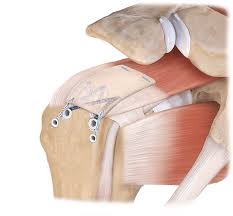
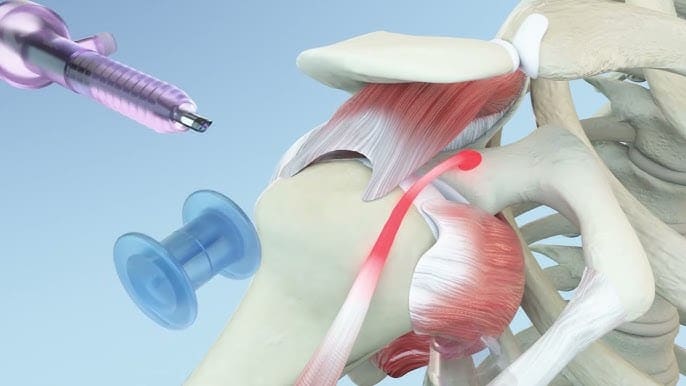
The repair of a tear in the rotator cuff tendons (supraspinatus, infraspinatus, teres minor and subscapularis) is carried out as an all-arthroscopic procedure via tiny incisions over the shoulder. The repair is performed using special devices called suture anchors. Depending on the size of the tear (small to massive rotator cuff tear), it may need a single anchor or up to five-six anchors. When necessary a single-row to double-row repair technique is used to get a robust repair. There is small risk of re-tear of the repaired tendon, this will depend on the quality of the tendon tissue. In the case of poor-quality tendon tissues, our specialists prefer to perform augmented rotator cuff tear, where the repair is augmented with a biological tissue patch to increase the chance of healing (Augmented rotator cuff repair). In some instances a re-tear in the repaired tendon can happen due to injury, in which case, our specialists may recommend revising the repair (Revision rotator cuff repair) to improve shoulder function.
Surgical Techniques for Rotator Cuff Repair
Rotator cuff repair can be performed using different surgical techniques depending on the tear size, location, and surgeon preference:
- Arthroscopic Repair
- Minimally invasive
- Performed through small incisions using a camera (arthroscope) and specialized instruments
- Less pain, quicker recovery
- Mini-Open Repair
- Small incision over the shoulder
- Combines arthroscopy for assessment and open repair for tendon stitching
- Open Repair
- Traditional method with a larger incision
- Used for complex or massive tears
- May involve tendon transfer or reconstruction if needed
What does arthroscopic rotator cuff repair involve?
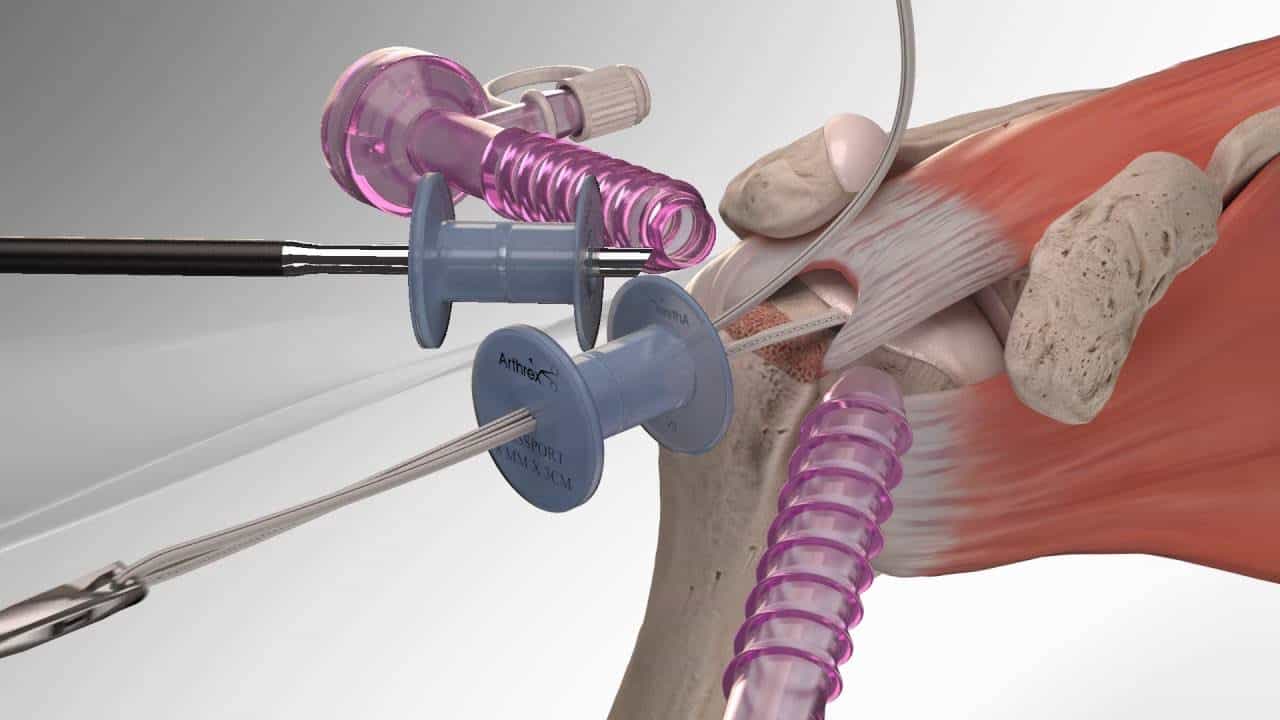
- Rotator cuff repair is performed arthroscopically (key-hole surgery) with stab incision around the shoulder joint (Arthroscopic rotator cuff repair). This procedure is performed under combination of general and regional anaesthesia.
- In this procedure, a camera is introduced into the joint, through which the whole joint is inspected first.
- Following the diagnostic arthroscopy, the torn tendon is freed of adhesions or degenerative tissue and then stitched back to the bone with the synthetic sutures and anchors. The anchors are small hard pellets (usually plastic) with tails of strong suture material that are fired into the bone in the humeral head. The suture tails are passed through the tendon and then tied down. Depending on the tear pattern, the surgeon may opt for single row or double row repair.
- The operation will also involve removing some bone from the underside of the bony arch (acromion) which is positioned just above the rotator cuff tendons (Subacromial decompression). This prevents the bony arch from rubbing on the tendons and repair when the shoulder is moving.
One may also need
- removal of the biceps tendon from the shoulder (Biceps tenotomy or Biceps tenodesis)
removal of the joint between the collar bone and shoulder-blade (Distal clavicle Excision).
Clinical Pathway
- You will be seen by the specialist in outpatient department for clinical evaluation.
- You will be asked certain questions related to your symptoms and examined thoroughly.
- Your investigations such as X-ray, MRI will be reviewed, following which a surgical plan of surgery will be made.
- A detailed explanation will be given to you with regards to surgery along with its pros and cons.
- You will be seen by the anesthetic team
- Your fitness for surgery will be evaluated.
- Investigations including blood tests will be carried out.
- A physical therapist will explain you with regarding to the post op precautions, exercises and immobilization.
- You will be admitted on the day of surgery in the morning. The surgery will be performed under general and regional anesthesia.
- After surgery, you will be under certain medication to control your post operative pain to make you comfortable.
- You will be discharged on the same or next day with post operative instructions.
- Your physical therapy will be started on the next day after surgery and will continue for around three months.
- You will be required to see the specialist in outpatient clinic on couple of occasions to assess the recovery. You were expected to recover completely in approximately three to six months