


Posted by: Dr. Priyadarshi Amit (Reg. No : DMC-5266) | 0 COMMENTS
Your orthopedist has recommended shoulder arthroscopy. Now comes the harder part — figuring out who actually does the cutting.
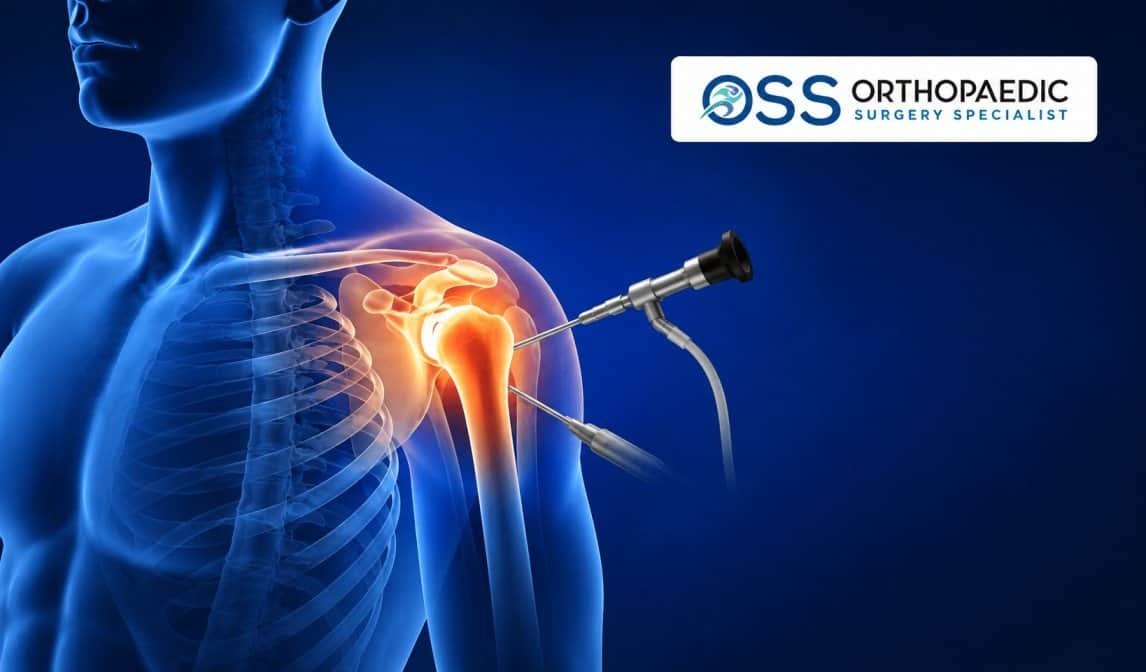
That decision carries more weight than most patients realize going in. On paper, shoulder arthroscopy sounds almost minor: a couple of small incisions, a tiny camera, some specialized tools threaded through portals no bigger than a pencil eraser. In reality, the difference between a good outcome and a frustrating one usually comes down to the surgeon’s hands and judgment, not the procedure itself. Figuring out how to choose the right surgeon for your shoulder arthroscopy really means figuring out who has solved your specific problem, over and over, not just who has a good reputation in general.
Because here’s the thing — a torn rotator cuff, a labral tear, and recurrent shoulder instability all get treated arthroscopically, but they’re not the same surgery. Different anchors, different techniques, completely different rehab timelines. A surgeon who’s excellent with one isn’t automatically excellent with all three.
The Hospital’s Name Won’t Save a Bad Outcome
There’s a common assumption that a well-known hospital automatically means a well-executed surgery. It doesn’t work that way. What actually predicts how you’ll do is the individual surgeon’s volume with your specific procedure, how often they run into complications, and whether they’re plugged into a physiotherapy team that picks up where the operation leaves off.
Take pattern recognition as an example. A surgeon doing 150 shoulder scopes a year will notice things a less experienced one might miss — a partial biceps tear tucked behind a cuff injury, say. That kind of instinct doesn’t come from a certificate on the wall. It comes from having seen the variation before, many times.
What Makes a Good Choice Different From a Risky One
Several key factors can make a meaningful difference:
- Fellowship training specifically in sports medicine or shoulder and elbow surgery, not just general orthopedics
- A track record you can actually verify — ask how many procedures matching your diagnosis they’ve done this year
- Modern surgical equipment, since arthroscopy towers and suture anchor systems aren’t all built to the same standard
- A working relationship with a physiotherapy team, because the surgery is only half the recovery
Skip any of these and you’re rolling the dice a bit more than necessary.
What to Actually Ask in Your First Consultation
Don’t hold back during the consultation. A surgeon worth choosing won’t flinch at direct questions — most appreciate a patient who’s paying attention.
- What exactly is torn or damaged, and how does that shape the surgical plan?
- How many cases like mine have you handled, and what’s your revision rate?
- If the arthroscope shows something different from what the MRI suggested, what’s the plan?
- Who’s running my rehab, and how soon does it start after surgery?
- What are the real risks for someone in my situation — not the generic list from a pamphlet?
Vague or rehearsed answers are a red flag. A surgeon who walks you through actual trade-offs and past cases is usually the one worth trusting.
Fitness for Surgery Isn’t the Same for Everyone
Not every patient walks in as a straightforward case, and this is where an experienced surgeon’s judgment really shows up. Someone managing uncontrolled diabetes, a cardiac condition, or kidney disease requiring dialysis needs a more thorough pre-anesthesia workup before elective shoulder surgery. Dialysis patients, in particular, deal with fluid balance and clotting issues that change how the anesthesia team approaches the case — a careful surgeon flags this before the operation, not after something goes wrong.
Soft-tissue repair itself is still evolving too. A handful of advanced centers have started looking at xenograft-based scaffolds — tissue sourced from animals, part of the broader research area around xenotransplantation — as a possible alternative to synthetic grafts for larger rotator cuff repairs. It’s not standard practice yet, and it won’t apply to most patients, but if you’re dealing with a large or recurrent tear, it’s a reasonable question to raise.
Comparing Surgeons in Delhi NCR
Delhi NCR has no shortage of orthopedic and sports medicine specialists, which sounds helpful until you’re actually trying to pick one. People searching for the best shoulder surgeon in Delhi NCR usually end up comparing senior consultants across hospitals like Max, Fortis, and Medanta, along with a few independent orthopedic centers. Hospital reputation alone won’t tell you much here. Check whether the surgeon shares their shoulder-specific outcomes, whether they’re active in relevant sports injury or shoulder societies, and whether past patients describe a smooth rehab process — not just a smooth day in the OR.
It’s also worth mentioning that many surgeons doing wrist arthroscopy surgery in Delhi NCR are the same people handling shoulder cases, since the two procedures draw on overlapping arthroscopic skills. If you’re dealing with a wrist issue alongside your shoulder problem, ask whether your surgeon covers both — it can spare you a second search entirely.
Quick Reference: What Matters vs. What Doesn’t
| Actually matters | Doesn’t matter as much as you’d think |
| Fellowship in shoulder/sports surgery | The word “orthopedic surgeon” on its own |
| Volume and outcomes for your specific injury | Overall size or ranking of the hospital |
| A real rehab partnership post-surgery | Ads promising “painless” or “scarless” surgery |
| Willingness to explain risks in detail | Total number of online reviews |
Common Questions
How long does recovery from shoulder arthroscopy take? Most people are back to daily routines within four to six weeks. Full strength for a cuff repair, though, can take four to six months depending on the size of the tear and how consistent the rehab is.
Is arthroscopy always better than open surgery? No. Massive tears, certain fractures, and some revision cases still call for an open approach. A surgeon who’s honest will tell you if arthroscopy isn’t right for your situation instead of pushing it anyway.
Should I get a second opinion before agreeing to surgery? For anything beyond a minor debridement, yes. It costs little and often either confirms the plan or surfaces something worth reconsidering.
Does age change the outcome? Less than people assume. Tissue quality and activity level matter more than the number itself. A 60-year-old who swims competitively heals differently than a 60-year-old who doesn’t move much — a good surgeon factors that in individually rather than going by age alone.
The Final Word
Picking the right surgeon for your shoulder arthroscopy isn’t about chasing a big name. It’s about specifics — how many cases like yours they’ve handled, how clearly they talk through risk, and whether their rehab process is actually built out or an afterthought. Whether you’re weighing general options or narrowing down the best shoulder surgeon in Delhi NCR specifically, the pattern holds: real experience with your exact problem beats polish and marketing every time. Ask the uncomfortable questions in that first consultation. The surgeon who answers them straight is usually the right one.
Related Blogs